
Best Time for an Everest Helicopter Tour: Month-by-Month Weather Guide
In This Guide
When the skies are clearest and Kala Patthar landings succeed most
The Short Answer First
If you only remember one line from this guide, make it this one: fly in October or November if you can, April if you can't, and always take the earliest departure on offer. The Himalayas reward dawn flights with glassy air and postcard visibility almost year-round — the difference between months is how often the mountain lets you visit at all.
Why Morning Flights Win, Whatever the Season
The Khumbu generates its own weather. As the sun climbs, warm air rises off the valleys, clouds build over the summits by late morning, and afternoon wind turns the high landing zones rough. Every experienced operator therefore schedules Everest departures between first light and about 10 AM. Book the first slot of the day even in peak season — the air is calmest, the peaks glow pink before sunrise hits the valley floor, and you keep the whole day as a buffer if the weather desk calls a hold.
Month by Month at a Glance
January – February (Winter)
Crisp, cold and dramatically clear. Post-monsoon air lingers, so visibility is superb and crowds are thin. The trade-off is temperature: Kala Patthar readings of -10°C to -18°C before wind chill are normal, and cold snaps occasionally delay early departures while frost clears. Pack serious layers and you will be rewarded with the emptiest landing zone you will ever see.
March – May (Spring)
The second-best window and arguably the most beautiful. March starts chilly and stabilizes; April is arguably the finest single month of the spring side — stable mornings, rhododendron hills on the lower approach, excellent landing success. May warms up and haze begins building ahead of the monsoon, so success rates dip slightly toward month-end.
June – August (Monsoon)
Honest advice: treat summer flights as opportunistic rather than planned. Cloud cover, rain and unstable air cancel far more departures than they allow. When a break does open, it can be spectacular — freshly washed landscapes and dramatic cloud seas — but you need flexible dates and an operator who will call you the moment conditions align.
September – November (Autumn)
The crown season. The monsoon scrubbed the atmosphere clean, mornings are reliably still, and landing success rates peak. September offers green valleys and clearing skies; October is the single most popular month — book weeks ahead; November keeps the clarity with fewer crowds and colder landings. If your trip dates are fixed months out, aim here.
December
An underrated compromise: winter clarity arrives, tourist numbers fall, and hotels in Kathmandu discount. Landings get genuinely cold, but midday-morning slots remain dependable for most of the month.
What "Flight Success Rate" Really Means
Operators quote success figures because the alternative outcome is not danger — it is rescheduling. Modern twin-certified aircraft, onboard oxygen and strict minimum-weather rules make the route statistically very safe; the practical risk is that cloud sits over the pass and your flight moves to tomorrow's first slot. That is why we tell every guest to keep one free morning in Kathmandu. Travelers who build in a buffer day essentially never miss the mountain.
Temperature Reality Check at Kala Patthar
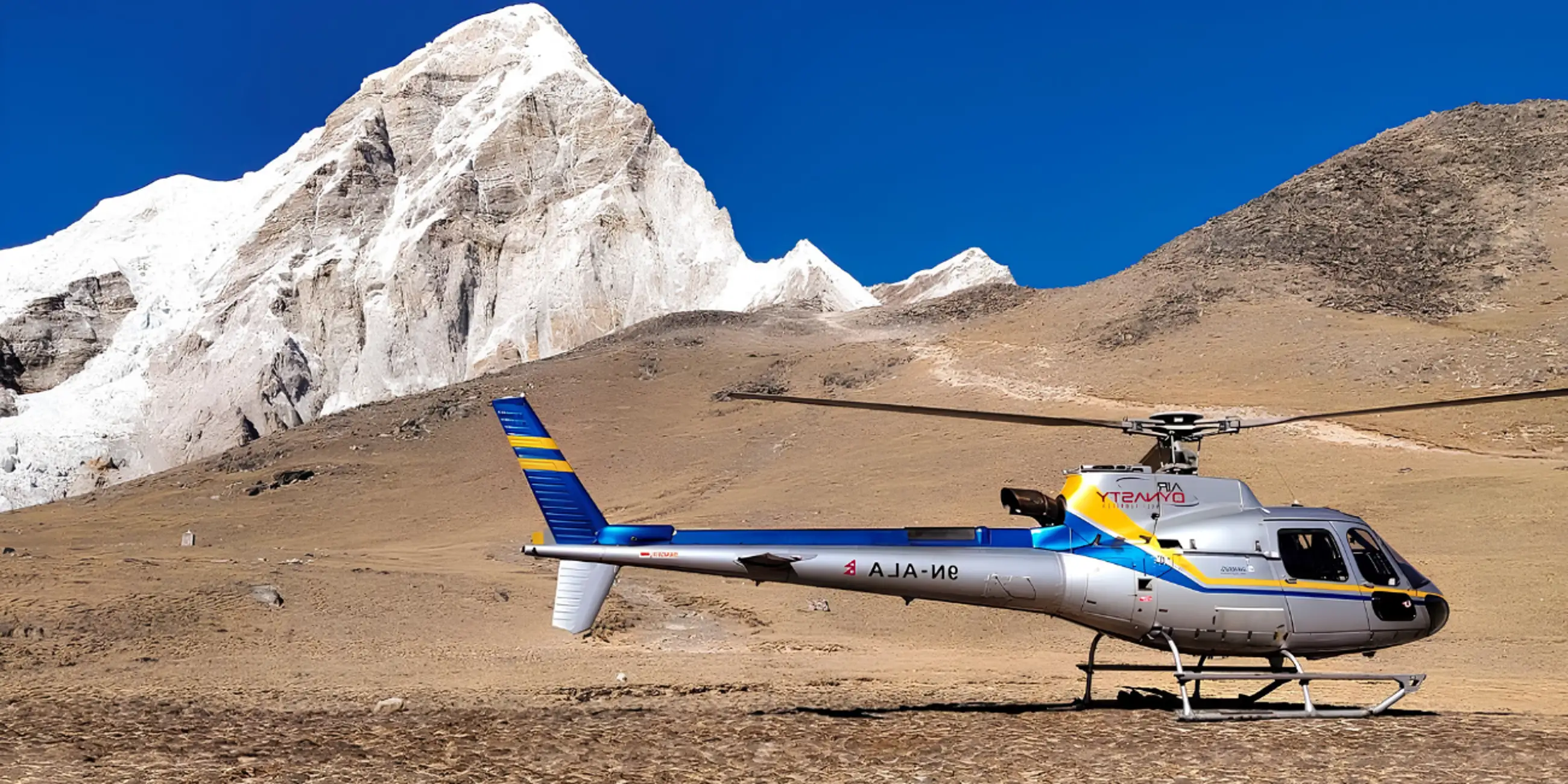
Kathmandu may be a pleasant 20°C when you board, but the landing zone at 5,545 meters plays by different rules: expect roughly -5°C in autumn mornings and -15°C or lower in deep winter, amplified by wind. Your ground time is short — ten minutes or so — but it is long enough to matter if you arrived in sneakers and a hoodie. Our packing guide covers exactly what to wear so the cold stays memorable rather than miserable.
Quick Recommendations
- Best overall: October, first slot of the morning
- Best value with great odds: early March or late November
- Best for photographers: February — hard light, empty skies, snow-heavy peaks
- Avoid unless flexible: July–August monsoon afternoons
About the Author: Everest Helicopter Tour Team
Written by our flight-operations team, who watch Himalayan weather systems for a living and plan departures around them every single morning.
Read Full Bio →
No comments yet. Be the first to share your thoughts!