
Everest Helicopter Tour Packing List: What to Wear at Kala Patthar
In This Guide
From Kathmandu warmth to -15°C at Kala Patthar — layer smart, pack light
The One Packing Problem You Need to Solve
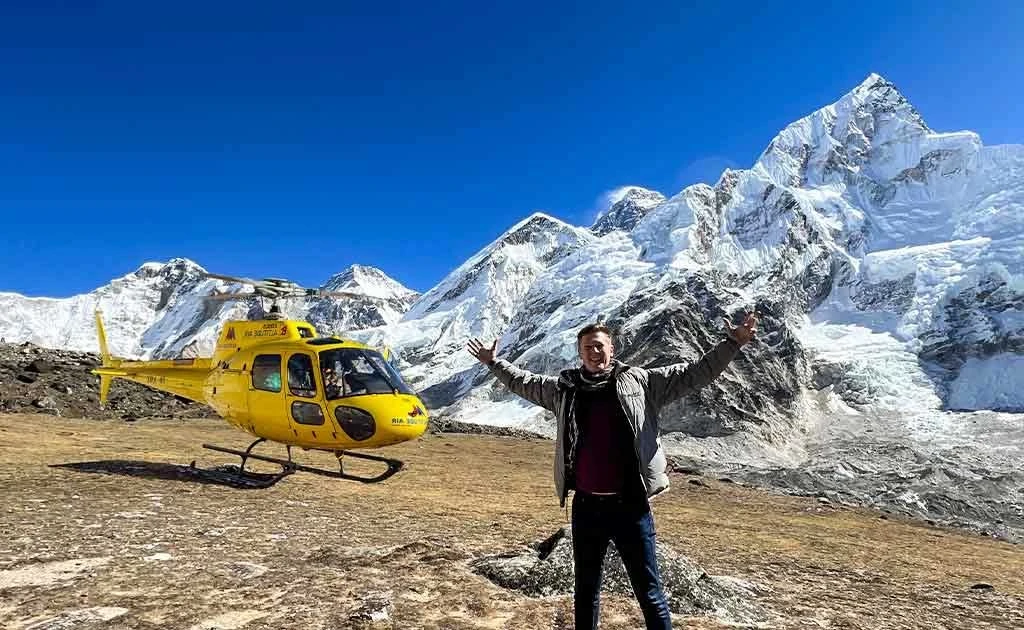
An Everest helicopter tour compresses four climate zones into a single morning. You leave a warm Kathmandu hotel at 5 AM, land on a ridge at 5,545 meters where the thermometer can read -5°C to -18°C with wind chill, sip coffee on a sunny terrace at Hotel Everest View an hour later, and are back in shirtsleeves by lunch. Your packing job is not "bring lots of clothes" — it is dress in layers you can shed in seconds, because every item travels with you all morning.
The Three-Layer System That Works
Base Layer
A synthetic or merino thermal top worn against your skin. Cotton t-shirts hold sweat and freeze at altitude, so skip them as your primary layer. If you run cold, add thermal bottoms — trousers over thermals are invisible and invaluable in winter months.
Mid Layer
A fleece or light down jacket. This is the layer doing the real work at the landing zone. A packable down sweater is ideal: warm when stationary, crushable into your duffel once you descend.
Outer Shell
Windproof and ideally waterproof. The wind on Kala Patthar is the real enemy; a proper shell turns a brutal landing into an exciting one. A hood helps more than any beanie when the breeze picks up.
Trousers: comfortable walking pants or softshell trekking trousers are perfect. Jeans work for autumn mornings but get cold fast in winter.
The Accessories That Make or Break the Landing
- Warm hat / beanie: most heat escapes through your head; a simple fleece beanie doubles your comfort at the summit stop.
- Gloves: insulated but slim enough to work a phone camera. Touchscreen-compatible liners are the smart pick.
- Sunglasses: non-negotiable. Category 3 or 4 lenses — snow glare at 5,500 meters genuinely hurts within minutes.
- Sunscreen + lip balm: UV intensity at altitude surprises everyone; SPF 50 on face and lips even on cloudy days.
- Neck gaiter or buff: pocket-sized insurance against windburn during the open-door photo moments some pilots allow.
Footwear
You do not need mountaineering boots — the Kala Patthar stop is a guarded ten-minute photo pause, not a hike. Warm sneakers with good grip handle autumn and spring fine. For winter departures, light hiking boots with thicker socks keep toes happy on frozen ground. Leave the sandals at the hotel; helipads are gravel and rotor wash is real.
Bags, Weight Limits and What NOT to Bring
Shared tours cap personal baggage around 10 kg per person — one soft duffel. Hard-shell suitcases stay in Kathmandu storage; your hotel will happily hold them. Inside the bag keep only what the day needs: layers you shed, water, snacks, documents, camera gear.
Leave behind: trekking poles, sleeping bags, drones (permits and airspace rules make them a non-starter), and more than one lens if you are a casual shooter. Every kilogram you save is margin your pilot will quietly appreciate.
Cameras and Electronics
Batteries hate cold. Keep your phone and spare batteries in an inside pocket close to body heat until the landing — cold-soaked batteries die at exactly the wrong moment. A wrist strap beats a neck strap inside the cabin. And put your phone away for the first two minutes after touchdown: the best souvenir of the day is watching other passengers see Everest for the first time, then take your own photos with steady hands.
Oxygen, Altitude and Small Comforts
Every reputable aircraft carries oxygen bottles and masks, and the crew briefs you on them before departure — listen, even if you feel invincible. Sip water through the morning rather than big gulps at once, go easy on the breakfast buffet champagne if you have another flight later, and mention any chest or breathing conditions when booking so the crew plans accordingly.
The 60-Second Checklist
- Thermal base layer + fleece/down mid layer + windproof shell
- Beanie, gloves, category 3–4 sunglasses, sunscreen, lip balm
- Warm sneakers or light boots, thick socks in winter
- Soft duffel under ~10 kg, phone + spare battery kept warm
- Passport/ID, booking reference, small cash for tips
Dress like the mountain is coming to meet you halfway — because it literally is.
About the Author: Everest Helicopter Tour Team
Compiled from thousands of guest debriefs at our Kathmandu counter — these are the items travelers thank us for, and the ones they regret leaving behind.
Read Full Bio →
No comments yet. Be the first to share your thoughts!