
Everest Helicopter Tour Cost 2026: Shared vs Private Charter Price Guide
In This Guide
Real 2026 price ranges, weight rules and what your money actually buys
So What Does an Everest Helicopter Tour Actually Cost?
The first question almost every traveler asks us is also the hardest to Google: what should an Everest helicopter tour cost in 2026? The honest answer is that you will find quotes anywhere from roughly USD 1,100 per person to well over USD 5,000 for the entire aircraft, and both numbers can be perfectly fair. It depends on one simple choice: do you buy a single seat on a shared flight, or do you buy the whole helicopter?
This guide breaks down both options the way we explain them at our own counter — with real ranges, the weight mathematics nobody warns you about, and a checklist of what should always be included in the price.
Shared vs Private: The Headline Numbers for 2026
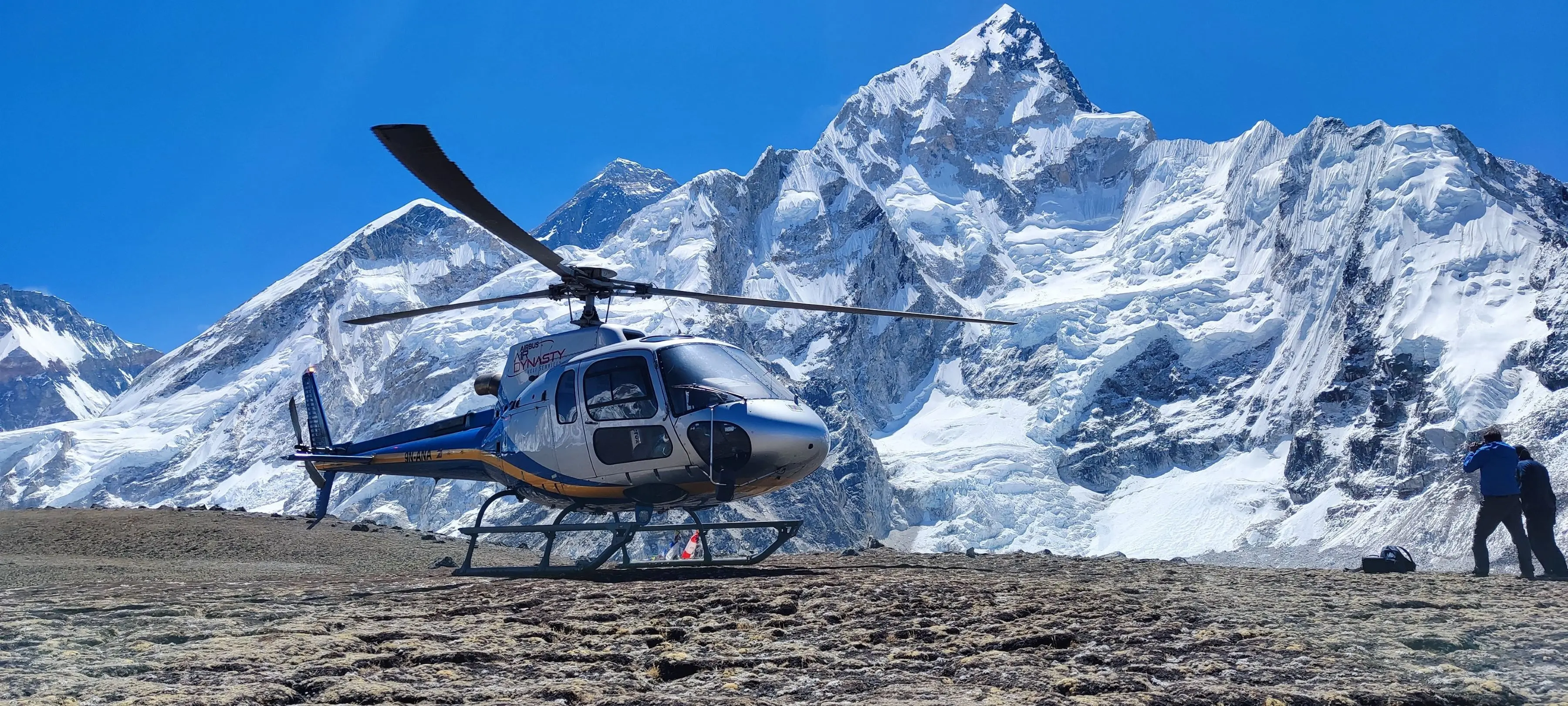
Shared group-joining tours typically run between USD 1,100 and USD 1,400 per person for the classic route — Kathmandu, Lukla fuel stop, Kala Patthar landing, breakfast at Hotel Everest View, and back by late morning. You share the cabin with four or five other travelers, which is exactly why the price works.
Private charters price the aircraft, not the person. Expect roughly USD 3,500 to USD 5,500 depending on the season, the exact route and how long you linger at the landing zones. Fill it with five friends and the per-person math starts looking surprisingly reasonable; book it as a couple and you are paying for exclusivity, timing flexibility and a cabin that answers only to you.
Breakfast-only variants that skip the high-altitude Kala Patthar landing usually shave USD 150–250 off the shared seat price, since they burn less fuel and spend less time in controlled airspace.
The Weight Mathematics Nobody Mentions
Helicopters live and die by payload, and the Everest route flies near the ceiling of what an AS350 can safely lift. Every operator will ask for each passenger's body weight when you book — this is not bureaucracy, it is physics. Total passenger load, fuel and baggage must fit inside strict limits, especially for the Kala Patthar landing where air density drops dramatically.
- Personal baggage on shared tours is normally capped around 10 kg per person — one soft duffel, no hard-shell suitcases.
- If the group's combined weight pushes limits, operators may split landings into two rotations or trim fuel stops. A reputable company explains this before payment, not at the helipad.
- On private charters you control the trade-off: fewer passengers means more luggage allowance and longer ground time.
What Should Be Included in the Price?
Whatever you pay, make sure the quote covers all of these. If any line is missing, ask why.
- Hotel pickup and drop-off inside Kathmandu
- All airport and landing-zone charges, including the Kala Patthar and Syangboche fees
- Oxygen bottles and masks onboard, plus a crew briefing before takeoff
- Breakfast or refreshment stop as described in your itinerary (Hotel Everest View on the classic route)
- A window seat — on shared flights every passenger gets one; if someone tells you otherwise, walk away
Exclusions to watch for: national park entry permits are sometimes billed separately, and tips for the pilot and ground crew remain customary rather than compulsory.
Which One Should You Book?
Choose a shared tour if you are solo, a couple, or simply want the Everest experience at the lowest sane price. The schedule is fixed, dawn departures are the norm, and honestly, half the fun is comparing photos with strangers from five countries at 5,545 meters.
Choose a private charter if you are traveling with children or older parents, proposing somewhere ridiculous, working to a tight connection, or you simply refuse to compromise on timing. Weather windows in the Himalayas are short; owning the whole aircraft means the pilot waits for your window, not the group's.
Booking Tips That Save Money and Regret
Book two to six weeks ahead for autumn dates — October fills first and prices harden accordingly. Spring offers slightly softer rates with similar success rates. Always confirm the aircraft type and total passenger count in writing, declare weights honestly, and keep one flexible buffer morning in your Kathmandu plan: weather holds happen to everyone, and the companies that reschedule you cheerfully are the ones worth flying with.
About the Author: Everest Helicopter Tour Team
Our operations desk has booked thousands of seats on the Kathmandu–Kala Patthar route. We update this guide every season so the numbers stay honest.
Read Full Bio →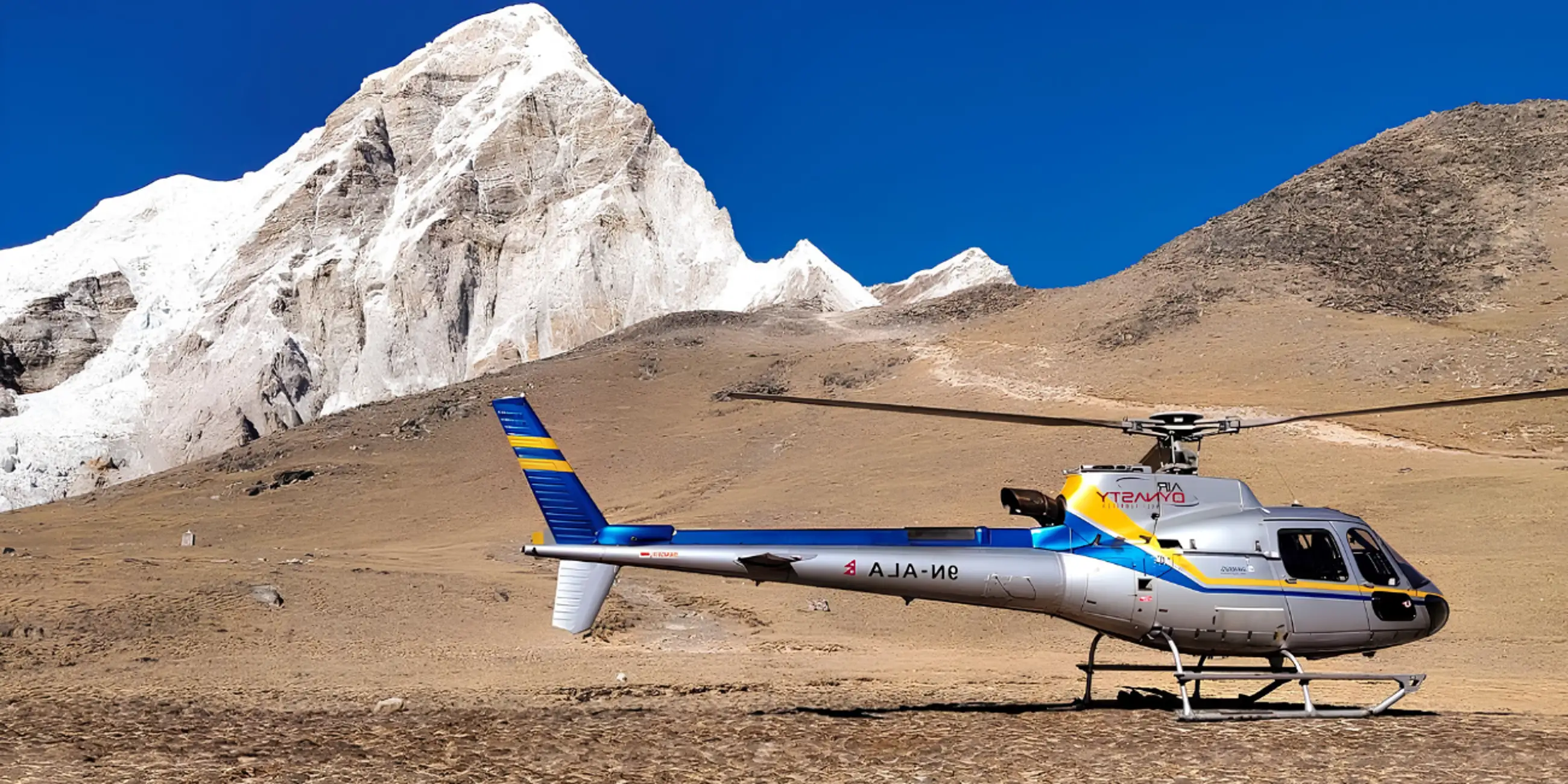
No comments yet. Be the first to share your thoughts!